Contents
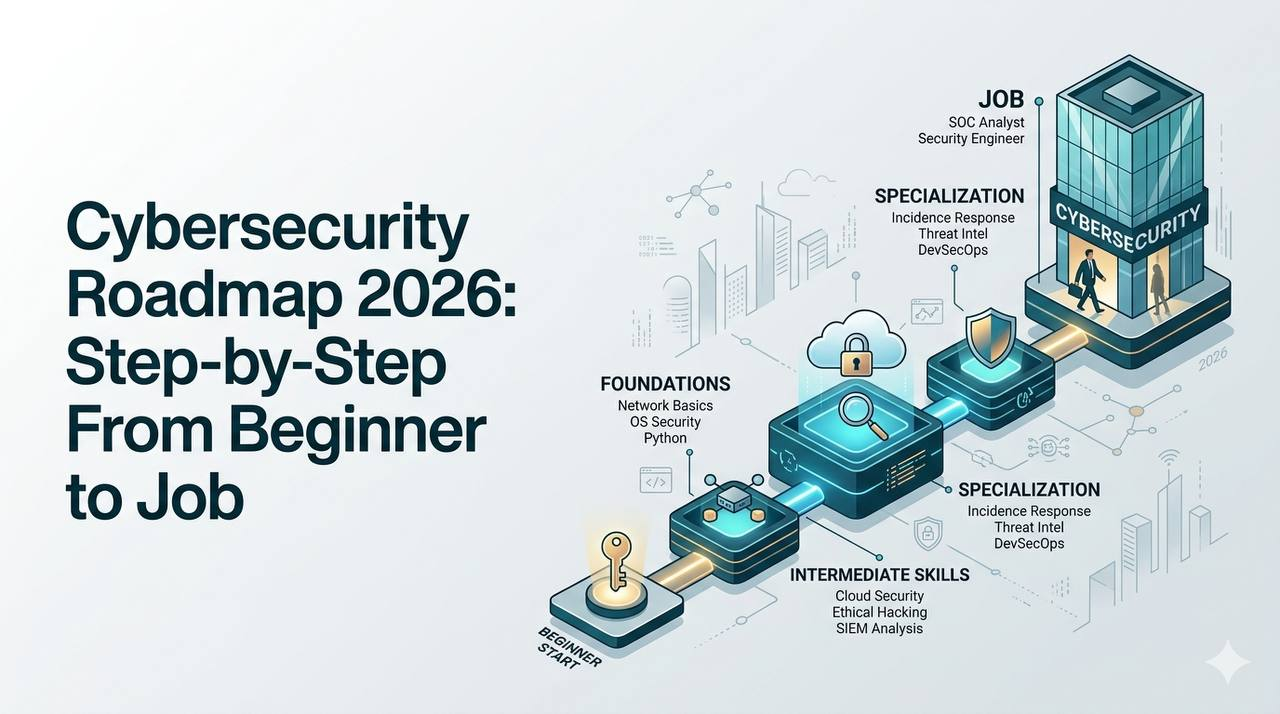
Cybersecurity Roadmap 2026: Step-by-Step From Beginner to Job
Cybersecurity is one of the fastest-growing technology fields, but many beginners are overwhelmed by the number of tools, certifications, and career paths available.
This roadmap provides a practical path from complete beginner to job-ready candidate.
Step 1: Learn Computer Fundamentals
Before learning cybersecurity, understand how computers work.
Focus on:
- Operating systems
- File systems
- Basic hardware concepts
- Computer troubleshooting
- System administration basics
Strong fundamentals make advanced security concepts easier to understand.
Step 2: Learn Networking
Networking is one of the most important cybersecurity skills.
Study:
- TCP/IP
- DNS
- HTTP and HTTPS
- Firewalls
- VPNs
- Routing and Switching
Most security problems involve networks in some way.
Step 3: Learn Linux and Windows
Security professionals work with both environments.
Important Linux topics:
- File permissions
- Users and groups
- Networking commands
- Bash basics
Important Windows topics:
- Active Directory
- User management
- Event Viewer
- Group Policy
Step 4: Learn Basic Programming
You do not need to become a software engineer.
However, basic scripting helps automate tasks.
Recommended languages:
- Python
- Bash
- PowerShell
Focus on practical automation rather than complex software development.
Step 5: Study Cybersecurity Fundamentals
Learn:
- Malware
- Phishing
- Social engineering
- Encryption
- Authentication
- Vulnerability management
- Incident response
These concepts appear in almost every cybersecurity role.
Step 6: Practice With Labs
Hands-on learning is critical.
Recommended platforms:
- TryHackMe
- Hack The Box
- PortSwigger Web Security Academy
- OverTheWire
Document your progress and lessons learned.
Step 7: Choose a Specialization
Popular cybersecurity paths include:
- Security Analyst
- SOC Analyst
- Penetration Tester
- Cloud Security Engineer
- Threat Intelligence Analyst
- Digital Forensics Specialist
- Security Engineer
Each path requires different skills.
Step 8: Build a Portfolio
Create projects that demonstrate your abilities.
Examples:
- Home labs
- Security scripts
- Write-ups
- Detection rules
- Vulnerability reports
A strong portfolio can significantly improve interview opportunities.
Step 9: Earn Relevant Certifications
Useful beginner certifications:
- ISC2 Certified in Cybersecurity (CC)
- CompTIA Security+
- Google Cybersecurity Certificate
Certifications should support practical experience, not replace it.
Step 10: Apply for Entry-Level Roles
Potential first jobs include:
- SOC Analyst
- Security Analyst
- IT Support
- Security Operations Intern
- GRC Analyst
Focus on gaining experience and continuing to develop your skills.
Common Mistakes
Avoid:
- Skipping networking fundamentals
- Collecting certifications without practice
- Ignoring Linux
- Waiting too long before applying
- Not building a portfolio
Final Thoughts
Cybersecurity is not a field that can be mastered overnight.
Consistent learning, practical experience, and clear career goals will produce better results than trying to learn everything at once.
Follow a structured roadmap, build projects, and focus on steady progress.

Related articles
Cybersecurity
The Best Countries for Cybersecurity Professionals in 2026
Compare the best countries for cybersecurity careers based on salary, demand, and growth opportunities.
Cybersecurity
The Best Cybersecurity Certifications for Beginners in 2026
A practical guide to the best beginner cybersecurity certifications to start your career in 2026.
Cybersecurity
The Best Free Resources to Learn Cybersecurity in 2026
Discover the best free websites, labs, courses, and platforms for learning cybersecurity in 2026.
Cybersecurity
CEH vs CISSP: Which Cybersecurity Certification Is Better?
Compare CEH and CISSP certifications, career paths, salaries, and job opportunities.
Cybersecurity
Cybersecurity Career Paths Explained: Which Path Is Right for You?
Explore the major cybersecurity career paths, compare responsibilities and skills, and discover which cybersecurity specialization fits your goals.
Cybersecurity
Are Cybersecurity Certifications Enough to Get a Job?
Learn whether cybersecurity certifications alone can help you get hired and what employers actually expect.