Contents
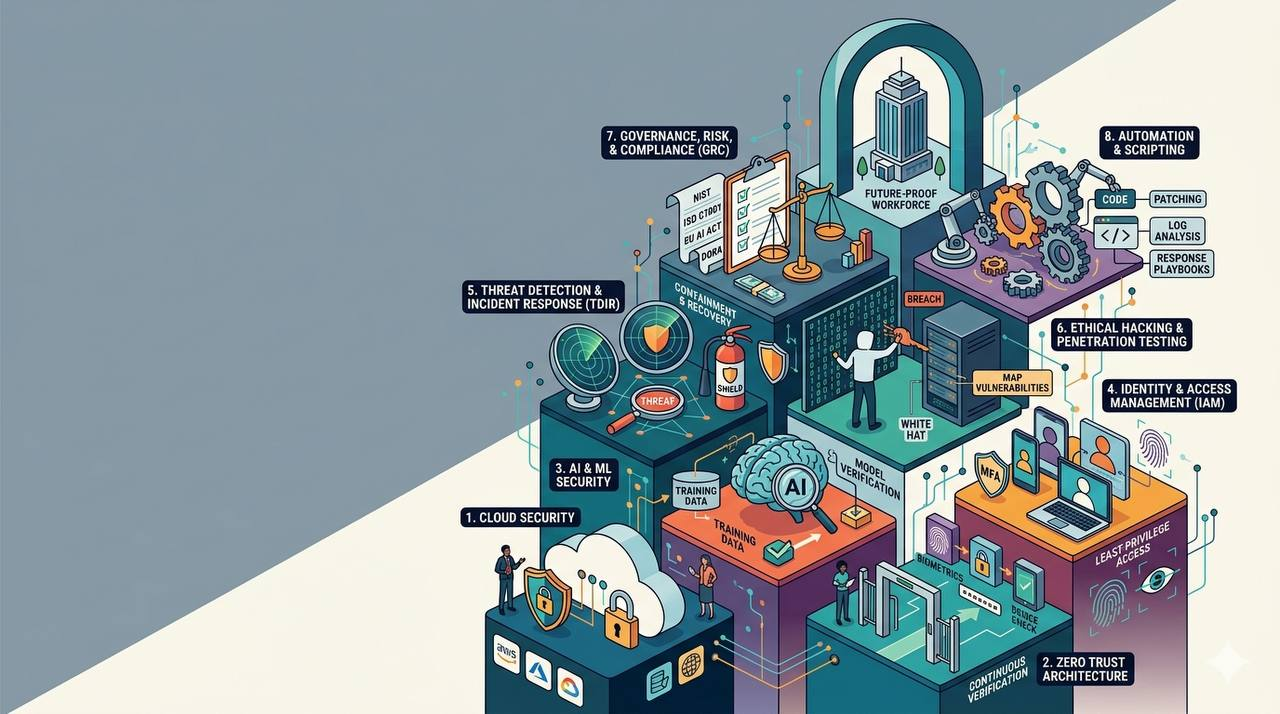
Cybersecurity Skills Employers Actually Want in 2026
Many cybersecurity beginners focus on certifications and courses, but employers are usually more interested in practical skills.
Understanding which skills companies actually value can help you spend your time more effectively and improve your chances of getting hired.
1. Cloud Security
Cloud platforms are now used by organizations of all sizes.
Employers increasingly seek professionals who understand:
- AWS
- Microsoft Azure
- Google Cloud
- Cloud identity management
- Cloud monitoring
Cloud security continues to be one of the fastest-growing cybersecurity specialties.
2. Zero Trust Security
Zero Trust has become a major security strategy.
Organizations want professionals who understand:
- Least privilege access
- Multi-factor authentication
- Identity verification
- Continuous monitoring
These concepts are becoming standard across many industries.
3. AI and Machine Learning Security
As AI adoption grows, organizations need people who understand the security risks associated with AI systems.
Important topics include:
- AI model security
- Data protection
- Prompt injection risks
- AI governance
This area is expected to grow significantly over the coming years.
4. Identity and Access Management (IAM)
Identity security remains one of the most important areas in cybersecurity.
Employers often look for knowledge of:
- User access management
- Authentication systems
- Single Sign-On (SSO)
- Multi-factor authentication
IAM professionals are needed across many industries.
5. Threat Detection and Incident Response
Organizations need security professionals who can identify and respond to threats quickly.
Key skills include:
- SIEM platforms
- Log analysis
- Threat hunting
- Incident investigation
- Alert triage
These skills are especially valuable for SOC and Security Analyst roles.
6. Ethical Hacking and Penetration Testing
Offensive security remains popular among employers.
Commonly requested skills include:
- Web application testing
- Vulnerability assessment
- Security auditing
- Network testing
Practical experience is often more important than theory.
7. Governance, Risk, and Compliance (GRC)
Not all cybersecurity careers are highly technical.
GRC professionals focus on:
- Security policies
- Risk management
- Compliance frameworks
- Security standards
Many organizations struggle to find skilled GRC professionals.
8. Automation and Scripting
Automation helps security teams work more efficiently.
Useful technologies include:
- Python
- Bash
- PowerShell
- API integrations
Even basic scripting skills can make a candidate more attractive.
Soft Skills Also Matter
Technical skills are important, but employers also value:
- Communication
- Teamwork
- Documentation
- Problem solving
- Critical thinking
Many hiring managers consider these skills just as important as technical expertise.
How Beginners Should Prioritize Learning
A practical order is:
- Networking
- Linux
- Security fundamentals
- Cloud basics
- Scripting
- Labs and projects
- Specialization
Trying to learn everything at once usually leads to frustration.
Final Thoughts
The cybersecurity landscape continues to evolve rapidly.
While tools and technologies change, employers consistently value professionals who understand security fundamentals, can solve problems, and demonstrate practical experience.
Focus on building skills that align with real job requirements rather than chasing every new trend.

Related articles
Cybersecurity
The Best Countries for Cybersecurity Professionals in 2026
Compare the best countries for cybersecurity careers based on salary, demand, and growth opportunities.
Cybersecurity
The Best Cybersecurity Certifications for Beginners in 2026
A practical guide to the best beginner cybersecurity certifications to start your career in 2026.
Cybersecurity
The Best Free Resources to Learn Cybersecurity in 2026
Discover the best free websites, labs, courses, and platforms for learning cybersecurity in 2026.
Cybersecurity
CEH vs CISSP: Which Cybersecurity Certification Is Better?
Compare CEH and CISSP certifications, career paths, salaries, and job opportunities.
Cybersecurity
Cybersecurity Career Paths Explained: Which Path Is Right for You?
Explore the major cybersecurity career paths, compare responsibilities and skills, and discover which cybersecurity specialization fits your goals.
Cybersecurity
Are Cybersecurity Certifications Enough to Get a Job?
Learn whether cybersecurity certifications alone can help you get hired and what employers actually expect.