Contents
How Long Does It Really Take to Become a Cybersecurity Engineer?
One of the most common questions asked by cybersecurity beginners is simple:
How long does it actually take to become a cybersecurity engineer?
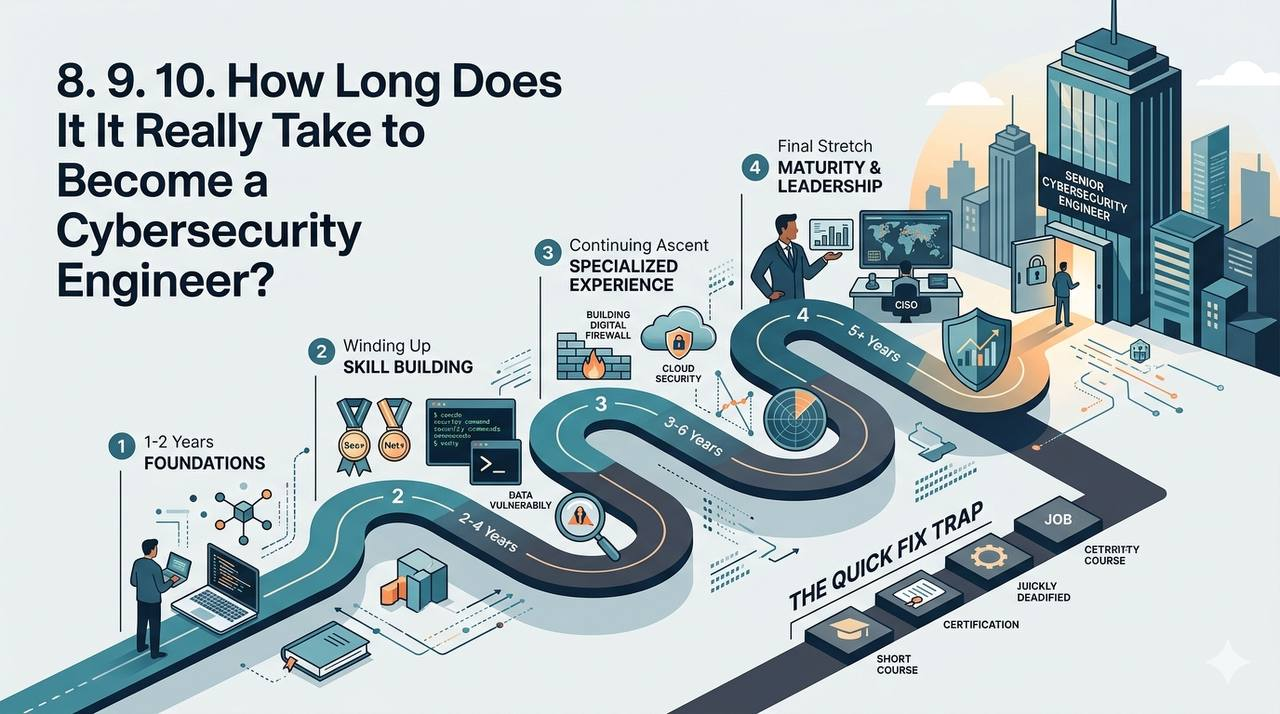
The answer depends on your background, learning speed, available time, and career goals. However, most successful professionals follow a similar progression.
The Short Answer
For most people:
- 6–12 months to learn the fundamentals
- 1–2 years to become job-ready
- 3–5 years to become an experienced cybersecurity engineer
While some people move faster, cybersecurity is a field that rewards consistent learning rather than shortcuts.
Stage 1: Learning the Foundations
Before cybersecurity, you need a solid understanding of technology fundamentals.
Focus on:
- Networking
- Operating systems
- Linux
- Windows
- Security basics
- Basic scripting
This stage usually takes several months of focused study.
Stage 2: Building Practical Skills
After learning the fundamentals, begin applying your knowledge.
Recommended activities:
- TryHackMe
- Hack The Box
- Home labs
- Security projects
- GitHub repositories
Hands-on practice is what transforms theory into useful skills.
Stage 3: Landing Your First Job
Most people enter cybersecurity through roles such as:
- SOC Analyst
- Security Analyst
- IT Support
- Security Operations Intern
The first job often provides more learning than months of independent study.
Stage 4: Developing Specialization
After gaining experience, professionals often choose a specific area.
Examples include:
- Cloud Security
- Penetration Testing
- Security Engineering
- Threat Intelligence
- Incident Response
- Digital Forensics
Specialization usually begins after the fundamentals are well established.
Common Factors That Affect Progress
Several factors influence how quickly you advance:
- Previous IT experience
- Study consistency
- Practical projects
- Certifications
- Mentorship
- Real-world experience
Two people starting at the same time can progress at very different speeds.
The Biggest Mistake Beginners Make
Many beginners look for shortcuts.
Examples include:
- Collecting certifications without skills
- Skipping networking fundamentals
- Avoiding hands-on practice
- Expecting immediate high-paying jobs
Cybersecurity rewards long-term skill development.
A Realistic Timeline
A realistic path might look like this:
Months 1–6
- Networking
- Linux
- Security fundamentals
- Basic labs
Months 6–12
- Projects
- Home labs
- Certifications
- Portfolio building
Year 1–2
- First cybersecurity role
- Real-world experience
- Skill development
Years 3–5
- Specialization
- Advanced certifications
- Senior responsibilities
Final Thoughts
Becoming a cybersecurity engineer is a journey rather than a single milestone.
Most successful professionals spend years developing technical skills, gaining experience, and expanding their knowledge.
The goal should not be reaching the finish line quickly. The goal should be building a strong foundation that supports long-term growth and career opportunities.

Related articles
Cybersecurity
The Best Countries for Cybersecurity Professionals in 2026
Compare the best countries for cybersecurity careers based on salary, demand, and growth opportunities.
Cybersecurity
The Best Cybersecurity Certifications for Beginners in 2026
A practical guide to the best beginner cybersecurity certifications to start your career in 2026.
Cybersecurity
The Best Free Resources to Learn Cybersecurity in 2026
Discover the best free websites, labs, courses, and platforms for learning cybersecurity in 2026.
Cybersecurity
CEH vs CISSP: Which Cybersecurity Certification Is Better?
Compare CEH and CISSP certifications, career paths, salaries, and job opportunities.
Cybersecurity
Cybersecurity Career Paths Explained: Which Path Is Right for You?
Explore the major cybersecurity career paths, compare responsibilities and skills, and discover which cybersecurity specialization fits your goals.
Cybersecurity
Are Cybersecurity Certifications Enough to Get a Job?
Learn whether cybersecurity certifications alone can help you get hired and what employers actually expect.