Contents
The Truth About Entry-Level Cybersecurity Jobs
Many people enter cybersecurity expecting to immediately become ethical hackers or penetration testers.
The reality is often different.
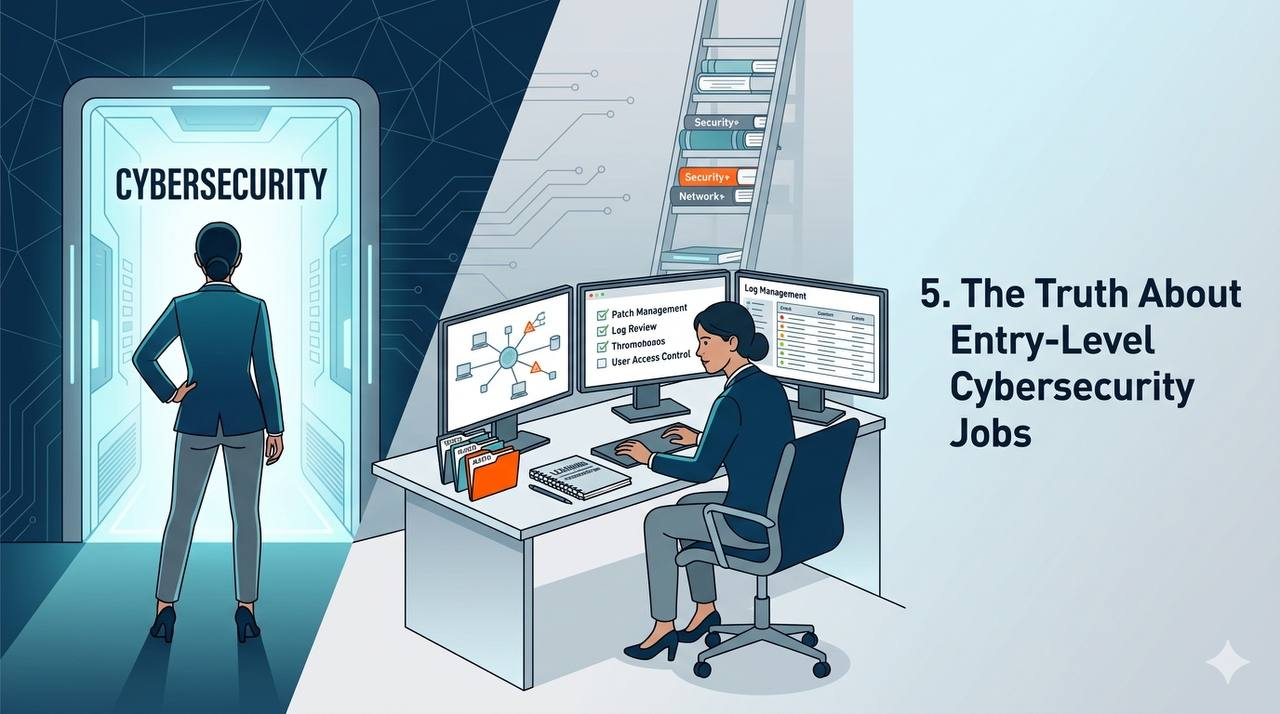
Most cybersecurity professionals start with foundational roles that focus on monitoring, troubleshooting, documentation, and security operations rather than advanced offensive security.
Understanding this reality can save beginners a lot of frustration.
The Biggest Misconception
One of the most common myths is that entry-level cybersecurity jobs involve hacking every day.
In reality, many beginner positions focus on:
- Security monitoring
- Alert investigation
- Log analysis
- Vulnerability management
- User access reviews
- Incident documentation
These responsibilities help build the experience needed for more advanced roles later.
Why Entry-Level Jobs Are Competitive
Cybersecurity is growing rapidly, but many companies still prefer candidates with IT experience.
Employers often receive hundreds of applications for a single junior position.
This is why candidates with projects, labs, certifications, and portfolios usually stand out.
What Employers Expect
For most entry-level positions, employers expect:
- Basic networking knowledge
- Linux fundamentals
- Windows fundamentals
- Understanding of common cyber threats
- Problem-solving skills
- Communication skills
They usually do not expect advanced expertise.
However, they expect evidence that you are actively learning.
Common Entry-Level Roles
Popular beginner positions include:
- SOC Analyst
- Security Analyst
- IT Support Technician
- Security Operations Intern
- GRC Analyst
- Vulnerability Management Analyst
These roles often serve as stepping stones toward more specialized careers.
The Importance of IT Fundamentals
Many beginners focus entirely on cybersecurity content and ignore general IT knowledge.
This is a mistake.
Strong understanding of:
- Networking
- Operating systems
- Active Directory
- System administration
often makes candidates more valuable than those who only memorize security concepts.
Certifications vs Experience
Certifications can help.
However, practical experience often carries more weight.
A candidate with:
- Projects
- Home labs
- GitHub repositories
- Technical write-ups
may perform better in interviews than someone with multiple certifications but no practical work.
What Your First Job May Actually Look Like
Your first cybersecurity role may involve:
- Reviewing alerts
- Investigating suspicious activity
- Updating documentation
- Escalating incidents
- Managing access requests
- Supporting security teams
These tasks may not seem exciting at first, but they build valuable experience.
Common Mistakes Beginners Make
Avoid these mistakes:
- Applying only for penetration testing roles
- Ignoring networking fundamentals
- Chasing certifications without practice
- Not building a portfolio
- Waiting until you feel "ready"
Most professionals continue learning throughout their careers.
Final Thoughts
Entry-level cybersecurity jobs are rarely glamorous, but they are important.
The fastest path into cybersecurity is usually through strong fundamentals, practical projects, certifications, and consistent applications.
Focus on gaining experience rather than chasing the perfect role. The advanced opportunities often come after proving yourself in foundational positions.

Related articles
Cybersecurity
The Best Countries for Cybersecurity Professionals in 2026
Compare the best countries for cybersecurity careers based on salary, demand, and growth opportunities.
Cybersecurity
The Best Cybersecurity Certifications for Beginners in 2026
A practical guide to the best beginner cybersecurity certifications to start your career in 2026.
Cybersecurity
The Best Free Resources to Learn Cybersecurity in 2026
Discover the best free websites, labs, courses, and platforms for learning cybersecurity in 2026.
Cybersecurity
CEH vs CISSP: Which Cybersecurity Certification Is Better?
Compare CEH and CISSP certifications, career paths, salaries, and job opportunities.
Cybersecurity
Cybersecurity Career Paths Explained: Which Path Is Right for You?
Explore the major cybersecurity career paths, compare responsibilities and skills, and discover which cybersecurity specialization fits your goals.
Cybersecurity
Are Cybersecurity Certifications Enough to Get a Job?
Learn whether cybersecurity certifications alone can help you get hired and what employers actually expect.